
Six Months to Solo: Practice Readiness Checklist
What I wish I knew before I hung my own shingle, plus the lessons I've learned along the way.
If you want or need to launch a solo practice, but feel intimidated and don’t know how to get started, this Guide is for you!

This checklist is a quick summary of everything I wish I knew and all the tings I was too afraid to ask, along with a few templates to help you get started.
What’s your niche?
Here’s what I did…I took my experience in construction and insurance litigation (risk management) and combined that with my experience in sustainable buildings to build a practice focused on climate and carbon work and high performing buildings. I built up two areas of experience and combined them to serve a unique niche.
Remember, passion is not a skill set, and if you’re not getting paid, it’s just a hobby. Build a practice and a business that will sustain your lifestyle.
Two books that I found helpful:
The Small Firm Roadmap, Lawyerist
Law Firm Growth Accelerator, Andrew Stickel and Bill Hauser
Take care of yourself
Mind your mental health. Your practice is important, but you can’t fill from an empty cup.
How will you cover your own costs and living expenses? What support do you have, and what support do you need?
The number one barrier for many folks is health insurance. And while it can be overwhelming, you can figure this out.
Here’s how I did it: I found an insurance broker through word of mouth from other solos. That broker works with the Healthplan Finder, and helps individuals and families find plans that work for them, usually free of charge. Some bar associations also have some type of coverage plan that you may qualify for. You can find options in your state through HealthCare.gov.
The money math
It actually doesn’t cost as much as you think it will to open a practice…
Practical Tip: keep costs low when you start. If you can, avoid anything other than month-to-month contracts that you can cancel if cashflow becomes a problem. When you can, do things analog until you understand what technology you actually need.
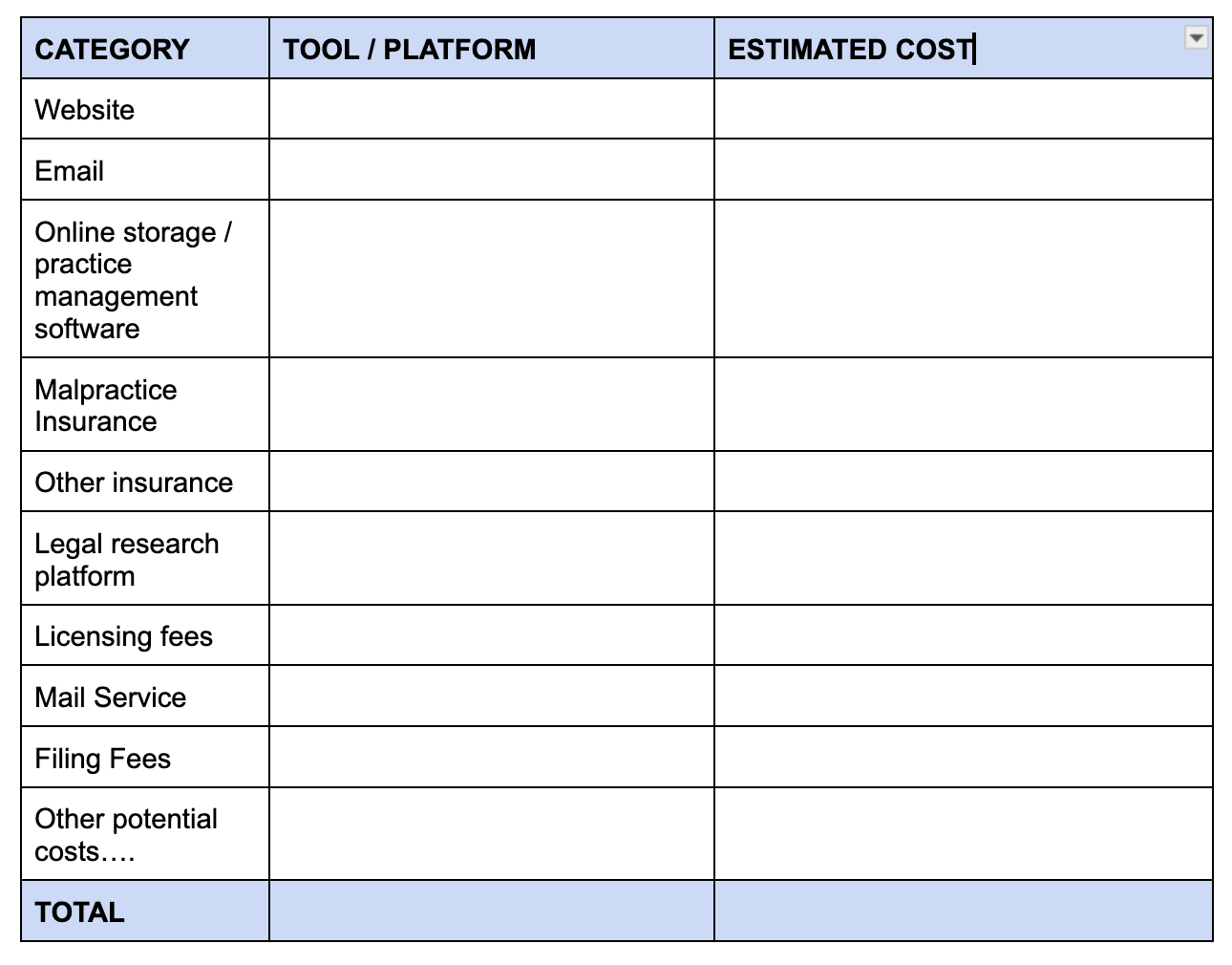
Here’s a quick chart with some sample cost categories that you can fill in with the tools you plan to use and the estimated costs.
Practical Tip: for reference, my costs for my first year were less than $5,000. See the BIG DISCLAIMER below.
Build your team
You are a solo, but you will need some support. I did so much myself my first two years, then, as I had more revenue, I got help and offloaded the things I wasn’t great at or that stressed me out (i.e. accounting).
Accountant. Find an accountant who understands IOLTA, if needed.
Practical Tip: at a minimum get an accountant to explain to you how taxes work in your state so you can prepare for both your business taxes and your personal taxes. Know what taxes you have to pay, about what amount that will be (i.e. a percentage of profit, etc.) and try to plan ahead.
Particularly if you are self-employed for the first time, paying Estimated Federal Taxes will be brand new and you need to know the deadlines and how to estimate so you are not surprised with a large tax bill at the end of the year. This happened to me once, it was awful.
General federal tax information here; state laws vary. A good accountant can help you figure this out.
Lawyer. You may not want to create the legal entity that is your firm on your own and / or you may want another lawyer to serve as your registered agent.
Ethics lawyer. Yes, they exist and they are extremely helpful. Most bar associations also have free ethics hotlines.
Other professionals. You may want or need other support services, such as IT, marketing, etc.
The legal setup / Build the legal entity
Even though you’re a lawyer, you may want to outsource this part
Check the name of your firm meets ethical requirements and that you can (legally) use it
Open a separate bank account, be aware of fees and other limits (minimum balances, transfer limits)
If handling client funds, or if needed for other reasons, make sure the bank you choose has IOLTA options
Understand the appropriate legal entity structure for your firm (this is where a business lawyer may come in handy, see above).
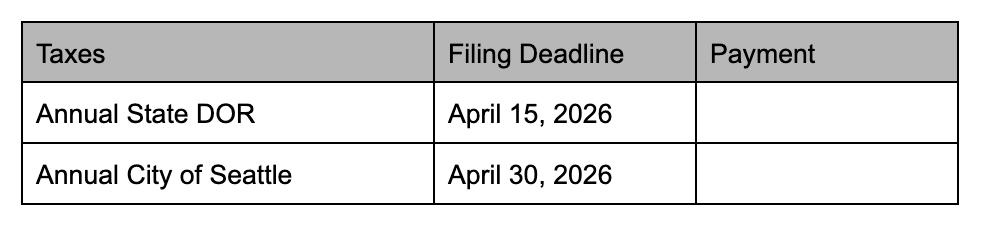
Figure out what state / local business licenses or registrations you need. For example, in Seattle my firm needs a Seattle Business License Tax Certificate to do business in the City of Seattle.
Practical Tip: I made a chart of the licensure and tax deadlines so I made sure I had them all in one place and then added those dates to my calendar. I also tracked costs / payments in a separate column, so I could budget for the following year.
Start lean
It doesn’t need to be fancy, it just has to work (and comply with ethical requirements)
Practical Tip: There are many free or low cost resources:
Public Libraries, Libraries at Law Schools, and Libraries at Local Courts
Bar Associations often have resources specifically for solo practitioners.
Some bar associations also worked out deals with certain vendors to get reduced costs / rates for members.
Be mindful of any technology / vendor contract that locks you in or forces you to keep portions of your business with that company. For example, many website hosting platforms want you to buy your domain through them; make sure you still own it and can transfer it if you want to.
If you need / want an office, coworking spaces can be great options. They tend to be cost-effective, many have month-to-month or even drop-in fees, and you can use conference rooms, phone booths, etc. as needed to meet with clients or maintain privacy / confidentiality. There are both large brands and small businesses that own and operate coworking spaces. Check them out and choose what works best for you.
Practical Tip: Insurance companies are incentivized to reduce claims against their insureds, so they often produce educational resources to support good practice management. Some companies also require you to attend a risk management seminar once a year. In my experience, these tools and resources can be very helpful.
Hustle and market
If you’ve never had to work to get clients, this will also be a new challenge for you.
Seek out local chambers, minority business certifications and chambers, bar associations.
Review and understand your jurisdiction’s rules and restrictions regarding marketing and advertising. This can be tricky - you need to understand what you can and cannot say about your firm and how you can or cannot approach potential clients.
Mentors are critical for developing your practice. Actively seek out mentors, and as your skills improve, make sure you support professionals who are newer on their career journey - pay it forward.
Build your skills
If you were a new associate at a law firm or are starting your own firm right out of law school, there’s probably some firm owner skill gaps, these were mine (will cover in later resources):
How to run a robust conflicts check
How to write a good engagement letter, including scope, and why these letters matter
How to work with a malpractice insurance broker
How to create a budget (for the client and yourself)
Practical Tip: for a first case in a newer practice area, I associated with another lawyer who had significant experience in that practice area. We followed our state’s ethics rules, made sure the client was informed and addressed it in the engagement letter; I learned a lot while ensuring I was providing competent legal services to this client, and future clients.
GIANT DISCLAIMER
In this educational resource I am just sharing my experience, I am not providing legal advice. I am also not providing tax or financial advice, or even business advice. I am only sharing information and education, including my story. The examples, figures, and data points included are purely for informational purposes, and they do not warrant, guarantee, or even suggest that this will be your experience or that you will achieve similar results.